


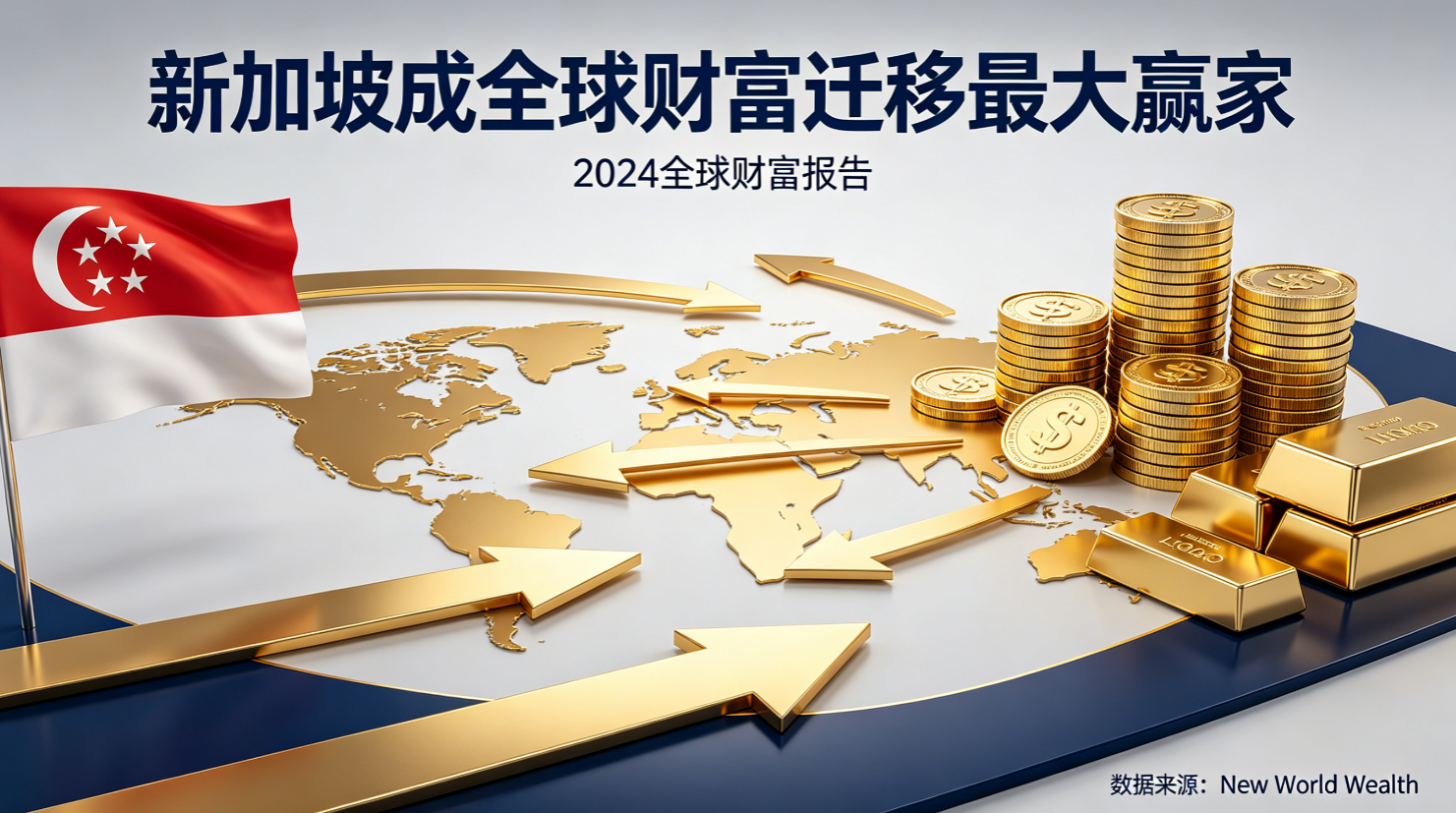
The latest global wealth migration report shows that as high-net-worth individuals speed up global asset allocation and citizenship planning, Singapore, with its stable political environment, sound institutional framework and mature financial market, has become the biggest beneficiary of the current wave of global wealth migration.
Singapore emerges as the biggest winner in global wealth migration
Henley & Partners, an international investment migration advisory firm, recently released its 2026 Private Wealth Migration Report, which says the traditional model of living and allocating assets in a single country is gradually being broken. More and more high-net-worth individuals prefer to hold residence rights, citizenship and business interests in multiple countries and regions, building a diversified "sovereign investment portfolio" to improve asset security and global mobility.
The report shows that in the first five months of 2026, the firm received applications from 86 countries and regions across 47 investment-migration programs. More than 28% of applicants currently live in a country or region different from the one of their nationality, reflecting a continued rise in cross-border wealth flows.
In the 2026 global wealth-mobility competitiveness ranking, Singapore took first place with 79.5 points out of 100. The report says Singapore's advantages are mainly its stable political and social environment, transparent legal system, well-developed financial system and long-term demand support from the continued concentration of wealth in Asia.
New Zealand ranks second with 75.8 points. As reforms to the Active Investor Plus visa program advance, New Zealand continues to attract international high-net-worth families for long-term asset and lifestyle planning thanks to its strong rule of law and high geopolitical safety.
In Europe, Italy and Greece stood out. Italy ranked near the top with 72.3 points, benefiting from its flat tax regime for new residents, relatively lenient inheritance tax arrangements and easier access to the EU market, while Milan is gradually becoming an important hub for international family offices and cross-border capital.
At the same time, as Spain ended its golden visa program and Portugal adjusted its investment migration policy, some international capital and migration demand shifted to Greece, helping it remain highly attractive in the global wealth-mobility race.
By contrast, the United States, one of the world's largest wealth-creation centers, scored only 62.3 points this time and ranked relatively low among major developed economies. The report says the U.S. faces a structural contradiction between wealth-creation and wealth-retention capabilities. On the one hand, its capital market scale and innovation ability remain world-leading; on the other, the global tax regime, increasingly complex tax-compliance requirements and longer immigration-processing times are pushing some high-net-worth individuals to seek overseas identity and asset-allocation solutions.