


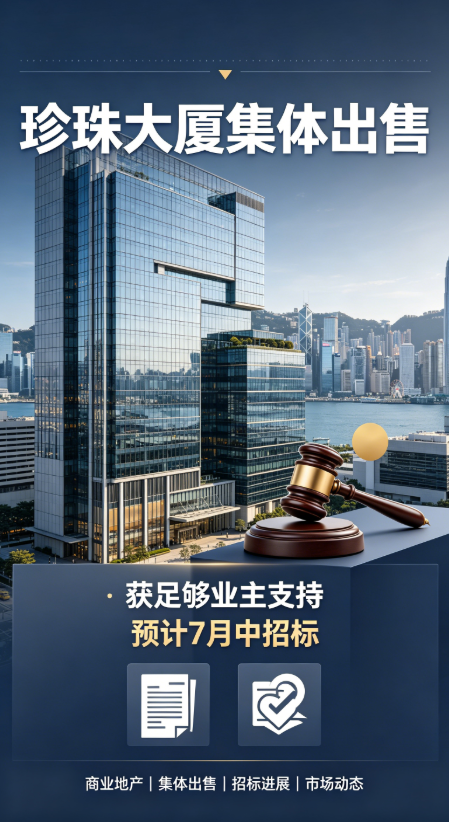
People's Park Centre Collective Sale Wins Enough Support: Rebirth for an Old Area and a New Test of Market Confidence
Keywords: People's Park Centre, collective sale, Chinatown, property market, development potential, old building redevelopment, developer bids
Introduction
The pace of renewal for Singapore's aging commercial and mixed-use developments is picking up in the collective sale market. Recently, the collective sale proposal for People's Park Centre, located in the heart of Chinatown, has secured enough owner support and is expected to be launched for tender on July 16, with a floor price of S$1.48 billion. This not only means the project has cleared a key hurdle in the collective sale process, but also highlights a fresh re-assessment of the redevelopment value of old buildings in prime locations.
For a 99-year leasehold project built decades ago with only about 43 years left on the lease, collective sale has become a practical choice for both owners and the market. Whether People's Park Centre can find a buyer this time will affect the owners' exit timing and also serve as an important case study for today's property market, developer sentiment and urban renewal logic.
1. With Enough Support, People's Park Centre Takes a Key Step Forward
According to a notice from the People's Park Centre Collective Sale Committee, 545 of the project's 701 units, representing 764 owners, have signed the collective sale agreement. This accounts for 80.54% of the total value and 84.56% of the total area. That means the project has met the legal support threshold and is now eligible for sale to the market.
Under the collective sale framework, support of more than 80% means most owners have reached a consensus on price, exit timing and future redevelopment potential. For People's Park Centre, that was not easy. The project was previously launched for tender in 2019 and 2023, but it failed to attract a buyer. In 2023, in particular, the asking price was as high as S$1.8 billion, and market response was relatively cautious. Now the floor price has been cut to S$1.48 billion, a significant reduction that shows the owners and advisers have made a much more practical judgment on current market conditions.
Although ERA, which is handling the sale, has not yet publicly announced the exact arrangement, the industry generally expects the project to enter tender in mid-July. In other words, People's Park Centre has moved from the "gathering support" stage to the key stage of "being tested by the market."
2. Strong Location Advantages, But the Investment Bar Is Not Low
People's Park Centre's biggest advantage is its irreplaceable location. The project sits above Chinatown MRT station, with commercial activity, foot traffic, transport links and tourism resources all highly concentrated around it. This is a prime downtown location in the truest sense. For developers, once redeveloped, such a project has the potential to become a high-density, mixed-use urban landmark.
Liong Yongzhi, sales director for investment sales at Huttons Asia, said developers looking at such opportunities first care about land location and long-term development potential. With MRT entrances on both sides and a mature city-center setting, People's Park Centre could be redeveloped into a new landmark rising more than 40 storeys. That kind of imagination is one of the most attractive parts of an old-building collective sale project.
Still, a great location does not mean the deal will be easy. People's Park Centre needs a huge total investment, and developers must consider land cost, construction cost, financing cost and whether the final sale price can support a reasonable return. With current interest rates, still-high construction costs and a property market with mixed demand, developers are now much more cautious with bidding. In other words, the site is good, but whether the price fits is the real key.
3. Owners' Price Cut Reflects Market Reality
The reduction of the floor price from S$1.8 billion to S$1.48 billion is not just a number change; it is a snapshot of the collective sale market moving from overly high expectations to realistic pricing. For many old projects, owners understandably hope for higher compensation. But if the price is far above what developers can accept, the collective sale will remain only on paper.
Hong Weiliang, an owner of two retail units, said People's Park Centre is already old, rents have fallen clearly, and renovation would be difficult, so redevelopment is a more workable option. His view reflects a common judgment among many owners: rather than continue relying on shrinking rental income year by year, it is better to lock in asset value while the site still has appeal and the market is still paying attention.
Another owner, Guo Jianwen, who holds a shop and a residential unit, offered a more pragmatic view. He said that as a businessman, if the price is right, he can "take profits when the time is right." That attitude shows collective sale is no longer just an emotional issue of letting go, but increasingly part of asset allocation and risk management. For older owners, real cash returns are often more attractive than continuing to hold an aging building.
4. The Collective Sale Market Is Heating Up, But the Bar for Success Has Not Fallen
Recently, several old buildings in Singapore have been pushing ahead with collective sale, showing a recovery in market confidence. For example, the City Plaza on Geylang Road has secured enough support, and Chinatown's People's Park Complex is making a third attempt to win owner support. These signs suggest that as more old projects face high renovation costs, falling competitiveness and inefficient land use, collective sale is again becoming an important path for urban renewal.
Liong Yongzhi said the growing number of projects securing enough owner support reflects rising market confidence. Still, meeting the required support rate is only the first step. The real challenge is whether developers are willing to bid, whether they see profit potential, and whether the project's conditions are attractive enough. He stressed that pricing, redevelopment potential, planning parameters and expected returns remain the core factors that decide investment success.
From a broader perspective, the collective sale market is entering a more balanced phase. Owners are more aware of the importance of market timing, while developers are placing more emphasis on financial discipline and risk control. The days when any launch would be snapped up are over. Today's market cares more about the match between "reasonable price" and "real potential." For projects in prime downtown locations, if the price is too high, even the advantages may be discounted; if the price is close to the market, strong interest is still possible.
Conclusion
People's Park Centre has successfully crossed the 80% owner-support threshold, marking this long-standing mixed-use project as entering the eve of renewal. For owners, this may be a chance to unlock asset value and leave the old era behind. For developers, it is a downtown site with both challenge and potential, and whether it can be turned into attractive returns will depend on how the market views the price and future plans.
At the industry level, the collective sale of People's Park Centre is more than a single transaction; it reflects structural changes in Singapore's property market at a mature stage: older buildings are being renewed faster, core-location values are being re-rated, owner expectations are becoming more practical, and developer decisions are becoming more cautious. In the future, whether similar projects succeed will depend not just on "how old" they are, but on "how much they are worth."
The next step for People's Park Centre still depends on the market's vote. But whatever the result, it has already become an important barometer in the current collective sale wave.